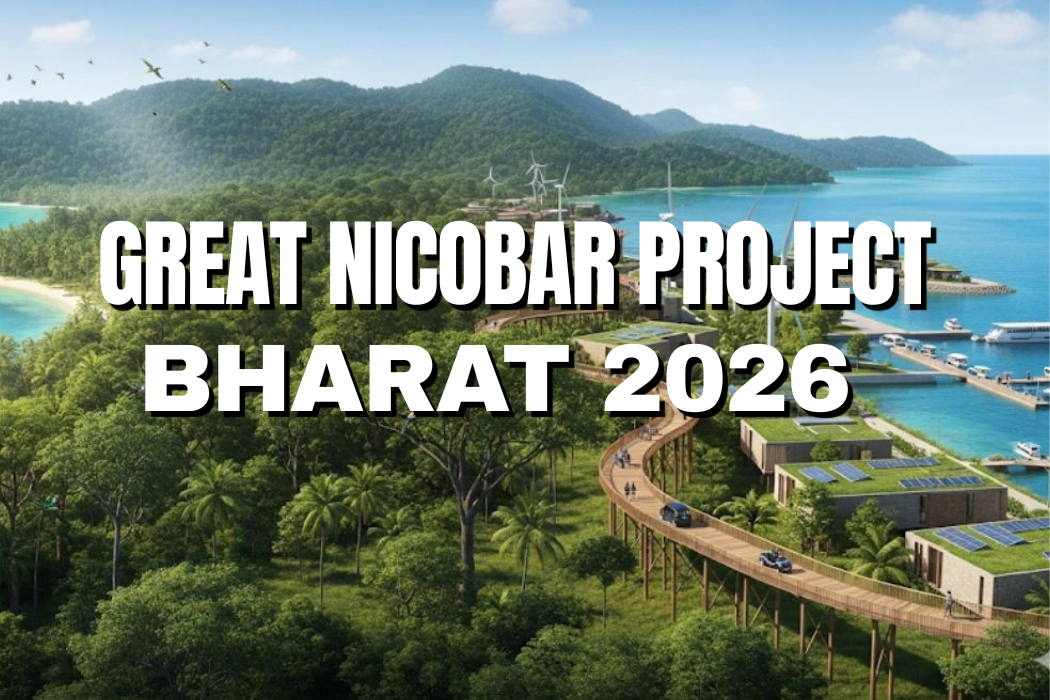
The Great Nicobar Project 2026 no longer a blueprint—it is a reality of concrete, steel, and geopolitical ambition. Located at the southernmost tip of India, just 150 km from Sumatra, the Holistic Development of Great Nicobar Island (GNI) is a ₹72,000-crore mega-project designed to transform an remote outpost into a global maritime gateway. For travelers, investors, and logistics professionals, GNI represents the "Singapore of India."
Jump to Section: Quick Navigation
By 2026, first phase of the Galathea Bay Transshipment Port has reached critical milestones, positioning India to finally leverage its proximity to the Malacca Strait. This isn't just about infrastructure, it's about shifting the world's economic center of gravity toward the Andaman Sea.
| Key Component | Projected Impact (2026-2030) | Strategic Objective |
|---|---|---|
| Galathea Bay ICTT | 16 Million+ TEU Capacity | Compete with Singapore/Colombo |
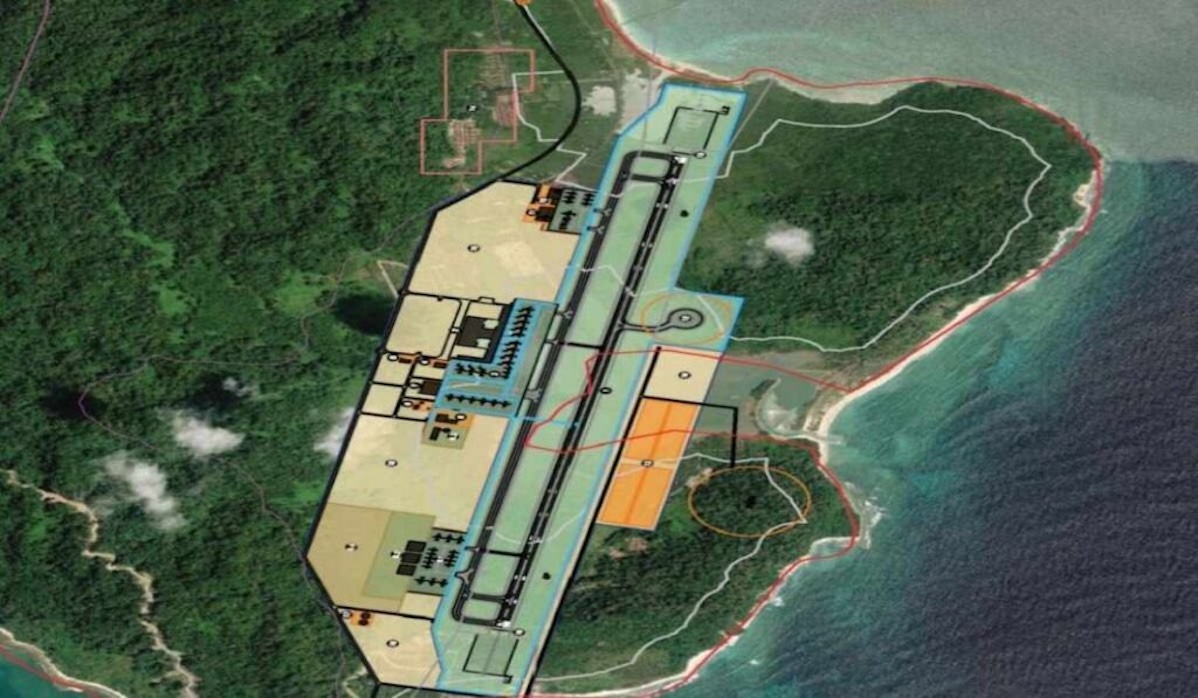
| Greenfield Int. Airport | 4,000 Passengers/Hour | Global Connectivity & Defense |
| Digital Twin Township | Population of 6.5 Lakhs | Economic Diversification |
| Gas/Solar Power Plant | 450 MWh Capacity | Energy Self-Sufficiency |
The Strategic Importance: Solving the Malacca Dilemma
Why is India pouring billions into a jungle-clad island 500 km away from Port Blair? The answer lies in the Malacca Strait. Over 70% of China’s oil imports and a massive chunk of global trade pass through this narrow choke point. Historically, India watched from the sidelines as Singapore and Colombo reaped the transshipment rewards.

The India vs. China Counter-Strategy: By developing the Great Nicobar Project, India is creating a "permanent aircraft carrier" and a commercial hub at the very mouth of the Strait. This allows the Indian Navy to monitor maritime traffic while simultaneously providing a competitive alternative for global shipping lines that currently bypass Indian shores due to lack of deep-draft facilities.
Power Projection and Regional Security
In 2026, the International Container Transshipment Terminal (ICTT) at Galathea Bay serves a dual purpose. While its primary role is commercial, its strategic location strengthens the Andaman and Nicobar Command (ANC). For high-net-worth travelers and business consultants, this security umbrella ensures that GNI is the safest investment zone in the Indo-Pacific.
Pro Tip: Most travelers think the Andamans end at Campbell Bay. In reality, the Great Nicobar Project is making this region the most talked-about maritime zone in the 2026 fiscal year.
Galathea Bay Transshipment Port: The 2026 Progress Report
The heart of the GNI project is the Galathea Bay Transshipment Port. With a natural draft of 20 meters, it is one of the few ports in the world capable of handling ultra-large container vessels (ULCVs).
As of early 2026, the breakwater construction is nearing completion. Unlike traditional Indian ports, Galathea is designed for automation and green logistics.
Why Transshipment Matters for Your Business
- Reduced Freight Costs: Indian exporters will no longer need to send cargo to Colombo or Singapore for transshipment, saving roughly $200 per container.
- Faster Turnaround: Direct calls from mother vessels to Great Nicobar will shave off 3–5 days from transit times to Europe and Africa.
- Global Hub Status: GNI is expected to capture a significant share of the 5 million TEUs currently handled by foreign ports.

Economic Future: Massive Job Potential & Investment
The Great Nicobar Project Jobs sector is currently seeing an unprecedented boom. We aren't just talking about construction labor; the demand has shifted toward specialized roles in 2026.
The 2026 Employment Landscape in GNI
The NITI Aayog's vision includes a "Digital Twin" city, which has opened doors for:
- Maritime & Logistics: Port operators, marine engineers, and supply chain managers.
- Hospitality & Tourism: As the Greenfield International Airport nears completion, luxury eco-resorts are scouting for local expertise.
- Sustainability Experts: Given the environmental sensitivity, there is a high demand for environmental impact auditors and marine biologists.
Reality Check: Living in Great Nicobar is not like Port Blair. It is remote, humid, and currently under heavy construction. However, for those looking for high-paying shipping jobs in India, GNI is the new frontier.
| Job Category | Experience Level | Estimated Growth (2026) |
|---|---|---|
| Marine Engineering | Mid-Senior | +45% YoY |
| IT & Smart City Admin | Junior-Mid | +30% YoY |
| Hospitality Management | Entry-Senior | +60% YoY |
Interested in exploring business opportunities or planning a corporate visit to the site? Connect with our local ground team for logistics support.
Logistics & Connectivity: Getting to Great Nicobar in 2026
One of the biggest hurdles for the Great Nicobar Project has always been logistics. In the past, reaching Campbell Bay (the headquarters) required a grueling 24-hour ferry ride or a rare helicopter slot.
The Greenfield International Airport Update
The Great Nicobar International Airport is the game-changer. Designed to handle both military and civil aircraft, it will bypass the need for a Port Blair layover.
- Direct Flights: Trials for direct connections from Chennai and Kolkata are expected by late 2026.
- Ferry Connectivity: High-speed catamarans have been introduced to cut the travel time from Port Blair to 8–10 hours.
- Internal Transport: A mass rapid transit system (MRTS) is planned for the new township to ensure seamless movement between the port and the residential zones.
Mistake to Avoid: Don’t assume you can just "book a hotel" in Great Nicobar right now. Most accommodation is currently reserved for project officials and government personnel. If you are planning a visit, you must secure "Entry Permits" and book through a verified Andaman travel agency that understands the 2026 restricted-zone protocols.
Environmental Reality: Balancing The Port with The Planet
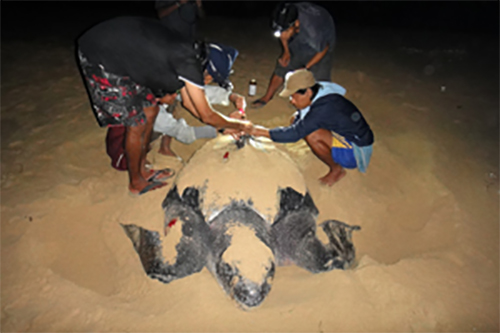
The biggest debate surrounding the Great Nicobar Project 2026 is its impact on one of the world's most pristine ecosystems. Critics often highlight the threat to the Leatherback Turtle nesting sites at Galathea Bay. However, the 2026 environmental framework includes a multi-layered mitigation strategy that is unprecedented in Indian infrastructure history.

Mitigation and Translocation: The 2026 Strategy
To address ecological concerns, the project has implemented a "Nature-First" logistics model. Key initiatives currently active in 2026 include:
- Coral Translocation: Over 15,000 coral colonies from the Galathea port site are being translocated to alternate sites under the supervision of the Zoological Survey of India.
- Turtle Nesting Buffer Zones: Specific stretches of Galathea Bay have been earmarked as "no-activity zones" during the nesting season (December to March).
- Compensatory Afforestation: To offset the felling of trees, the government has initiated a massive afforestation drive covering nearly 250 sq. km in mainland India (Haryana and Rajasthan) to maintain national ecological balance.
Reality Check: While the project involves the diversion of 130 sq. km of forest land, nearly 65 sq. km within the project area is being preserved as a permanent "Green Belt." This ensures that the township remains a "Forest City" rather than a concrete jungle.
Tribal Safeguards: Respecting the Shompen and Nicobarese
Great Nicobar is home to the Shompen (a Particularly Vulnerable Tribal Group) and the Nicobarese. Protecting their way of life is a legal and moral mandate. The 2026 roadmap explicitly states that no tribal displacement will occur for the project.
The Shompen Policy 2026
The administration has enforced a strict buffer zone policy:
- Zero Contact Zones: Massive forest corridors have been left untouched to ensure the Shompen can continue their traditional hunting and gathering without outside interference.
- Re-notification of Tribal Reserves: While 73 sq. km of tribal land was de-notified for the project, the government has added over 76 sq. km of new land to the Tribal Reserve, resulting in a net increase in protected indigenous territory.
- Restricted Access: Even in 2026, visiting tribal areas without an "Aboriginal Tribe" (AT) permit is a non-bailable offense. This ensures the project's growth doesn't lead to "human safaris" or cultural erosion.
Business & Operational Costs in Great Nicobar (2026 Estimates)
For businesses looking to set up base or provide services in Great Nicobar, understanding the 2026 cost structure is vital. Because of its remote location, operational costs are roughly 25-35% higher than in Port Blair or mainland India.
| Service/Requirement | Estimated Cost (2026) | Notes |
|---|---|---|
| Commercial Permit (Annual) | ₹1.5 Lakh - ₹5 Lakh | Varies by business category |
| Logistics (Freight from Port Blair) | ₹12,000 / Ton | Via high-speed cargo ferry |
| High-Speed Internet (Leased Line) | ₹8,000 / Month | Via undersea cable (CANI Project) |
| Office Space (Per Sq. Ft) | ₹85 - ₹120 | Limited supply in Campbell Bay |
Pro Tip for Investors: The government is offering significant GST holidays and tax incentives for "Green Energy" and "Export-Oriented" units under the Andaman Industrial Policy 2026. This often offsets the higher logistics costs.
Viksit Bharat 2047: The Long-Term Roadmap
The Great Nicobar Project is the cornerstone of the Viksit Bharat 2047 vision. By the time India celebrates 100 years of independence, GNI is expected to be a $30 Billion sub-economy.
Project Phases & Milestones
- Phase I (2025–2035): Completion of the first two berths of the Galathea Port, the Greenfield Airport, and the first residential sectors.
- Phase II (2036–2041): Expansion of the transshipment hub to 8 million TEUs and the launch of the Cruise Terminal.
- Phase III (2042–2047): Full operationalization of the smart city, aiming for a total population of 6.5 lakhs and a self-sustaining green energy grid.

Final Verdict: Is Great Nicobar Ready for You?
The Great Nicobar Project 2026 is not for the average tourist—not yet. It is for the visionary, the strategist, and the logistical powerhouse looking to anchor themselves in the world's most important shipping lane.
If you are planning a visit for site inspections, project consulting, or strategic research, remember that Great Nicobar is a high-security zone. Navigating the permits, ferry schedules, and restricted area protocols requires local expertise.
Are you planning a visit to Great Nicobar or Campbell Bay for business? Don’t get stuck in Port Blair with missing permits or canceled ferries. Our team provides specialized logistics support for the Southern Islands. Connect with our expert
Status: High-Intensity Development Zone
Accessibility: Restricted (Permit Required)